Mold, Moisture & Indoor Air Quality Investigations
Identify the source, understand the affected conditions, and determine what should happen next.
Mold and indoor environmental concerns often begin with a building condition that is not immediately obvious. Water intrusion, elevated moisture, ventilation problems, concealed microbial growth, construction activity, and other sources can affect both the building and the people occupying it. Summit Environmental provides mold testing, moisture investigations, and indoor air quality assessments for residential and commercial properties in Boise, Nampa, Meridian, Eagle, and throughout the Treasure Valley. Our investigations focus on identifying the conditions contributing to the concern, determining the affected areas, and using sampling or monitoring where it provides useful information.
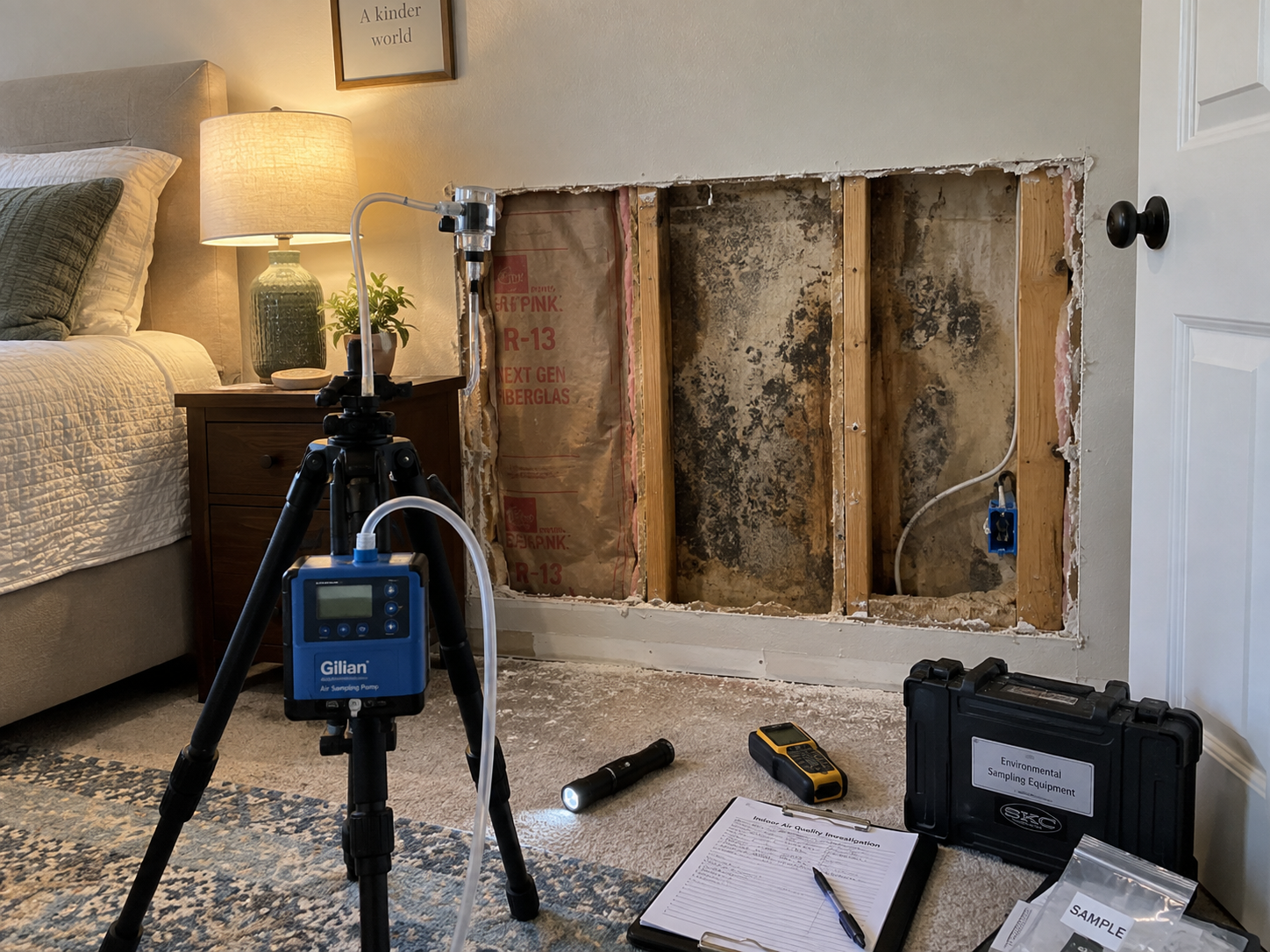
The investigation should begin with the building — not the laboratory.
Mold requires moisture to grow. That moisture may result from plumbing leaks, roof or building-envelope failures, groundwater or drainage conditions, flooding, condensation, elevated indoor humidity, poor ventilation, or other building conditions.
Indoor air conditions may also be affected by temperature, humidity, building materials, cleaning products, furnishings, construction activity, equipment, outdoor air, chemical use, dust, combustion sources, or other building-specific factors.
Summit evaluates the reported problem and the physical conditions of the property before selecting analytical testing. Laboratory results are most meaningful when interpreted alongside what is actually occurring within the building.
Find the moisture condition behind the visible problem.
Visible growth is only one part of a mold investigation. Summit evaluates moisture pathways, affected materials, building conditions, and potential source areas so the investigation can determine both the extent of the condition and why it developed.
Mold & Moisture Investigations
Summit evaluates properties where mold growth is visible, suspected, or associated with water damage, odors, moisture concerns, or other indoor environmental conditions. The investigation may include visual assessment, moisture measurements, humidity evaluation, examination of building materials and potential source areas, and targeted sampling where it can answer a specific question.
Water-Damage Investigations
Following plumbing failures, roof leaks, flooding, appliance failures, drainage problems, or other water events, Summit evaluates where water migrated, whether materials remain wet, and whether additional drying, removal, investigation, or remediation should be considered.
Crawlspace & Attic Assessments
Crawlspaces and attics can develop significant moisture problems related to ventilation, drainage, groundwater, plumbing leaks, roof conditions, condensation, insulation, or seasonal humidity. Summit evaluates visible growth, moisture conditions, building materials, ventilation, and potential water sources to determine why the condition developed.
Residential & Commercial Investigations
The investigation is adjusted to the building type, occupancy, construction, reported concern, and project objective. Summit develops the scope around the property rather than applying the same testing package to every building.
Indoor complaints rarely point to one universal test.
Summit evaluates the complaint, location, timing, building conditions, ventilation, recent activities, potential environmental sources, and occupant patterns before determining what measurements or sampling will provide useful information.
Occupant Complaint Investigations
Reported concerns may include odors, irritation, headaches, respiratory discomfort, excessive dust, unusual temperatures, or symptoms associated with a particular room, work area, or period of time. Summit evaluates patterns that may help direct the investigation.
Ventilation & Indoor Environmental Conditions
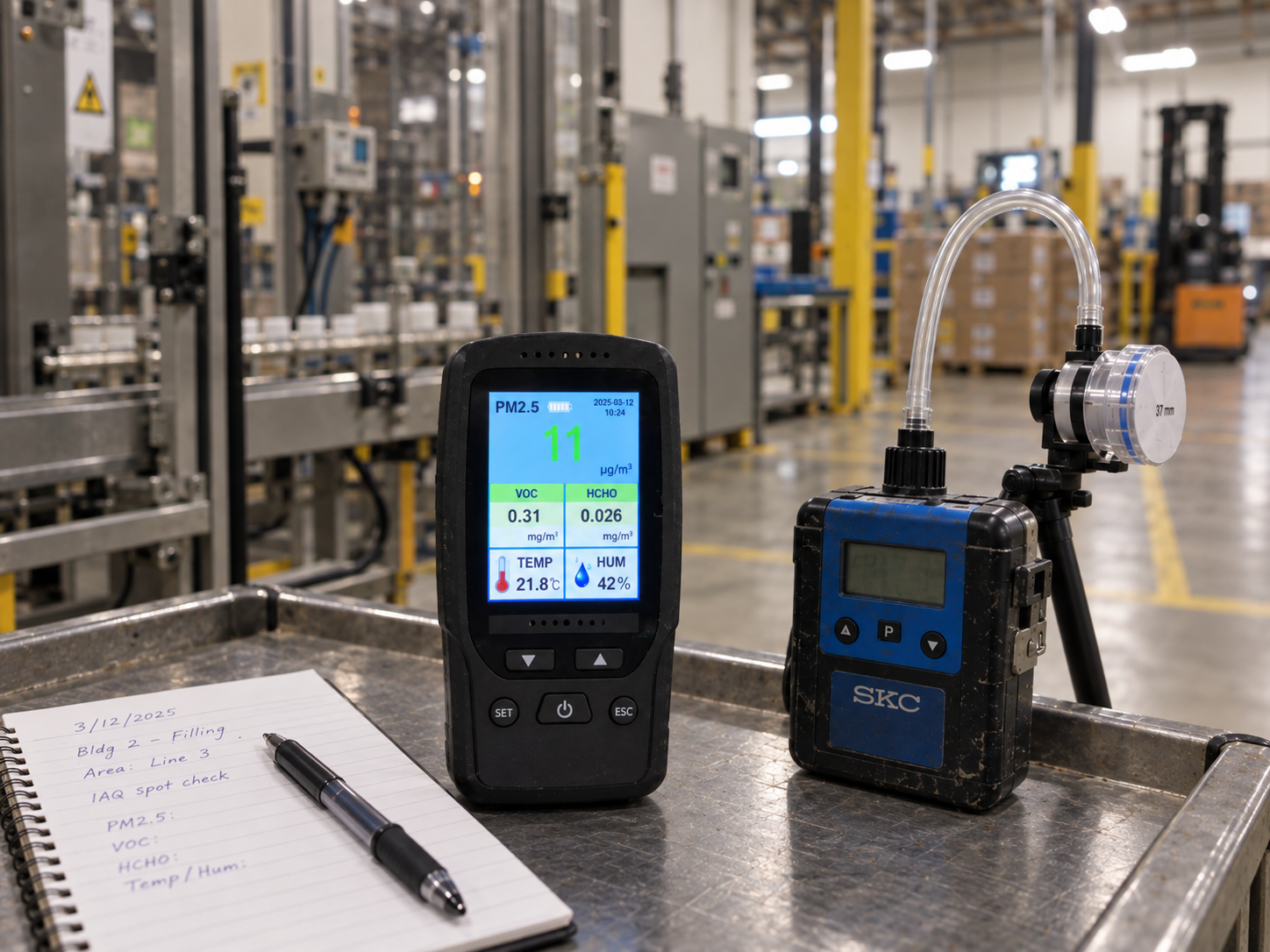
Temperature, relative humidity, carbon dioxide, air movement, pressure relationships, outdoor-air exchange, supply and return conditions, and other indicators can be evaluated as part of a broader indoor environmental investigation.
VOC & Odor Investigations
Odors and volatile organic compounds may originate from building materials, cleaning products, adhesives, coatings, fuels, stored chemicals, furnishings, equipment, construction activity, or nearby operations. Summit evaluates likely source areas and air movement before determining whether VOC sampling or other testing is appropriate.
Particulate & Dust Evaluation
Construction, renovation, manufacturing, warehouse activity, deteriorating materials, outdoor sources, HVAC systems, or other operations can contribute to dust and particulate concerns. Targeted monitoring or sampling may be used where appropriate.
Post-Construction & Post-Renovation IAQ
New materials, paints, adhesives, coatings, flooring, dust, demolition activity, and HVAC changes can affect indoor conditions after construction or renovation. Summit can help distinguish temporary construction-related conditions from issues that may require additional corrective action.
Mold will return if the moisture condition remains.
Removing damaged materials may address visible growth, but remediation is unlikely to provide a lasting solution if the source of moisture is not corrected. Air and odors can also move through buildings, so the reported problem may originate from another room, crawlspace, mechanical area, adjacent tenant space, outdoor source, or activity elsewhere in the building.
Summit evaluates the relationship between moisture, pressure, ventilation, drainage, HVAC operation, building assemblies, activities, and potential sources so corrective actions can address the condition rather than only the symptom.
Testing is useful when it answers a specific question.
Sampling is not treated as a substitute for inspecting the property. Summit selects measurements and analytical methods based on the environmental question identified during the investigation and interprets the results with the building conditions and potential source locations.
Mold Sampling
Air, surface, material, or other samples may be useful when the source is unclear, concealed growth is suspected, visible conditions need additional characterization, or documentation is needed before or after remediation.
Indoor Air Monitoring
Depending on the concern, testing may include VOCs, particulates, carbon monoxide, carbon dioxide, temperature, relative humidity, or other parameters relevant to the building.
Post-Remediation Verification
After corrective work, independent evaluation can include visual assessment, moisture evaluation, and targeted sampling where appropriate to determine whether the identified condition was addressed before reconstruction or normal occupancy.
Build the investigation around the problem the client is trying to solve.
Summit reviews the reported concern, affected areas, building conditions, recent activities, ventilation, moisture, potential sources, and other environmental factors that may influence indoor conditions. Measurements or laboratory testing are then used where they can answer a defined question.
The findings are interpreted together so the client understands whether a condition is present, where it appears to originate, what areas may be affected, what the testing means, and what corrective actions should be considered.
Mold testing should answer a building question.
Do I need mold testing or a building investigation first?
The investigation should generally begin with the reported concern and the building conditions. Sampling can be added when it helps answer a specific question, such as whether concealed growth is suspected or additional characterization is needed.
What conditions can contribute to mold and moisture problems?
Potential sources include plumbing leaks, roof or envelope failures, drainage problems, groundwater or crawlspace moisture, flooding, condensation, elevated humidity, HVAC conditions, and insufficient ventilation.
What can be evaluated during an indoor air quality investigation?
Depending on the complaint, an investigation may evaluate ventilation, odors, VOCs, particulates, temperature, relative humidity, carbon dioxide, carbon monoxide, building activities, materials, outdoor sources, and other conditions relevant to the property.
Can Summit perform post-remediation verification?
Yes. Verification may include visual assessment, moisture evaluation, and targeted sampling where appropriate to determine whether the identified condition was addressed and whether the area is ready for reconstruction or normal occupancy.
Concerned about mold, moisture, or indoor air conditions?
You do not need to know whether you need air testing, surface sampling, VOC testing, particulate monitoring, moisture measurements, or a full building assessment before contacting Summit.
Tell us what you are observing, where the concern is occurring, when it began, what happened at the property, and whether anything recently changed within the building. We can develop an investigation appropriate to the property and the question that needs to be answered.