Surface Water Studies
Manage stormwater, understand receiving waters, and protect downstream conditions.
Surface water connects construction activity, industrial operations, land disturbance, spills, sediment, and other site conditions directly to surrounding drainage systems, streams, rivers, ponds, wetlands, and other receiving waters.
Summit Environmental provides stormwater permitting, compliance support, surface-water assessment, and environmental investigation for construction projects, commercial and industrial facilities, developers, property owners, municipalities, and other organizations that need to understand or manage potential impacts to surface water.
Our work is designed to determine what requirements apply, how water moves through the site, what pollutants or sediment may be entering runoff, and what actions are necessary to maintain compliance and protect receiving waters.
Effective surface-water management starts with understanding the site.
Stormwater and surface-water concerns can develop in very different ways. A construction project may need permit coverage before land disturbance begins. An operating facility may need to evaluate runoff from material-storage or loading areas. A spill may enter a storm drain and require investigation downstream. Sediment may be leaving a disturbed site, or water-quality monitoring may be necessary to understand conditions in a receiving water.
Summit evaluates the project or facility as a complete drainage system. We consider site activities, topography, drainage pathways, discharge locations, potential pollutant sources, erosion and sediment conditions, receiving waters, and applicable environmental requirements before determining the appropriate scope.
For regulated projects, this includes understanding the permitting and documentation requirements that apply from the beginning of the project through final stabilization or permit closeout. The goal is to develop a practical program that works in the field, not simply produce paperwork that remains disconnected from actual site conditions.
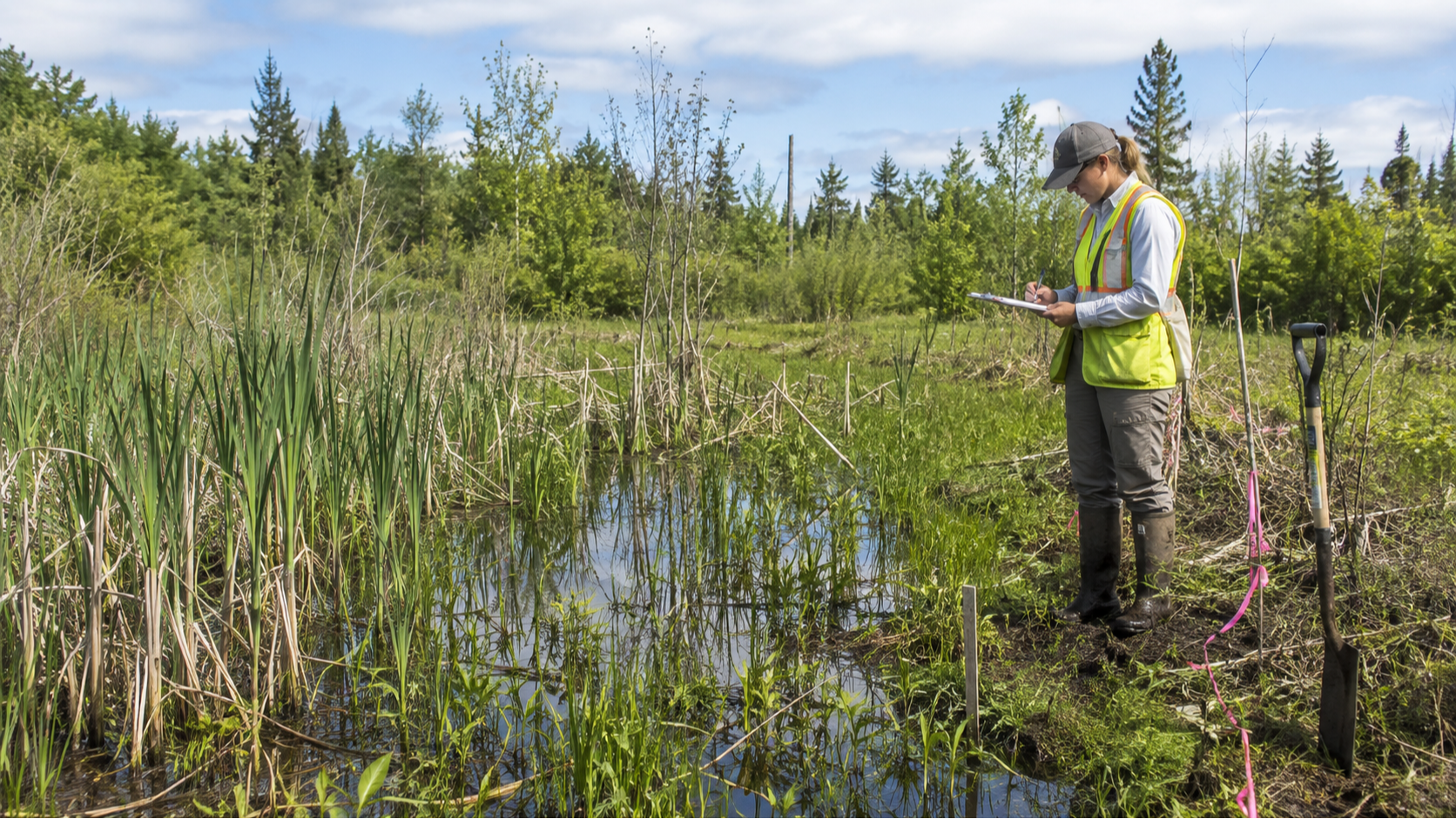
Connect permitting, field conditions, and receiving-water protection.
From the first permit determination through inspection, monitoring, corrective action, and closeout, Summit keeps the written program aligned with actual site conditions.
Stormwater Permitting & Planning
Stormwater permit requirements depend on the type of activity, amount of disturbance, facility operations, discharge conditions, receiving environment, and regulatory program applicable to the site.
Summit can help determine whether permit coverage is required and prepare permit applications or notices, SWPPPs, SWMPs, erosion and sediment-control information, site maps, BMP selections, inspection procedures, stabilization requirements, and other supporting documentation.
Obtaining coverage is only the first step. The project team also needs to understand implementation responsibilities and ongoing inspection, monitoring, documentation, and corrective-action requirements.
Construction Stormwater Compliance
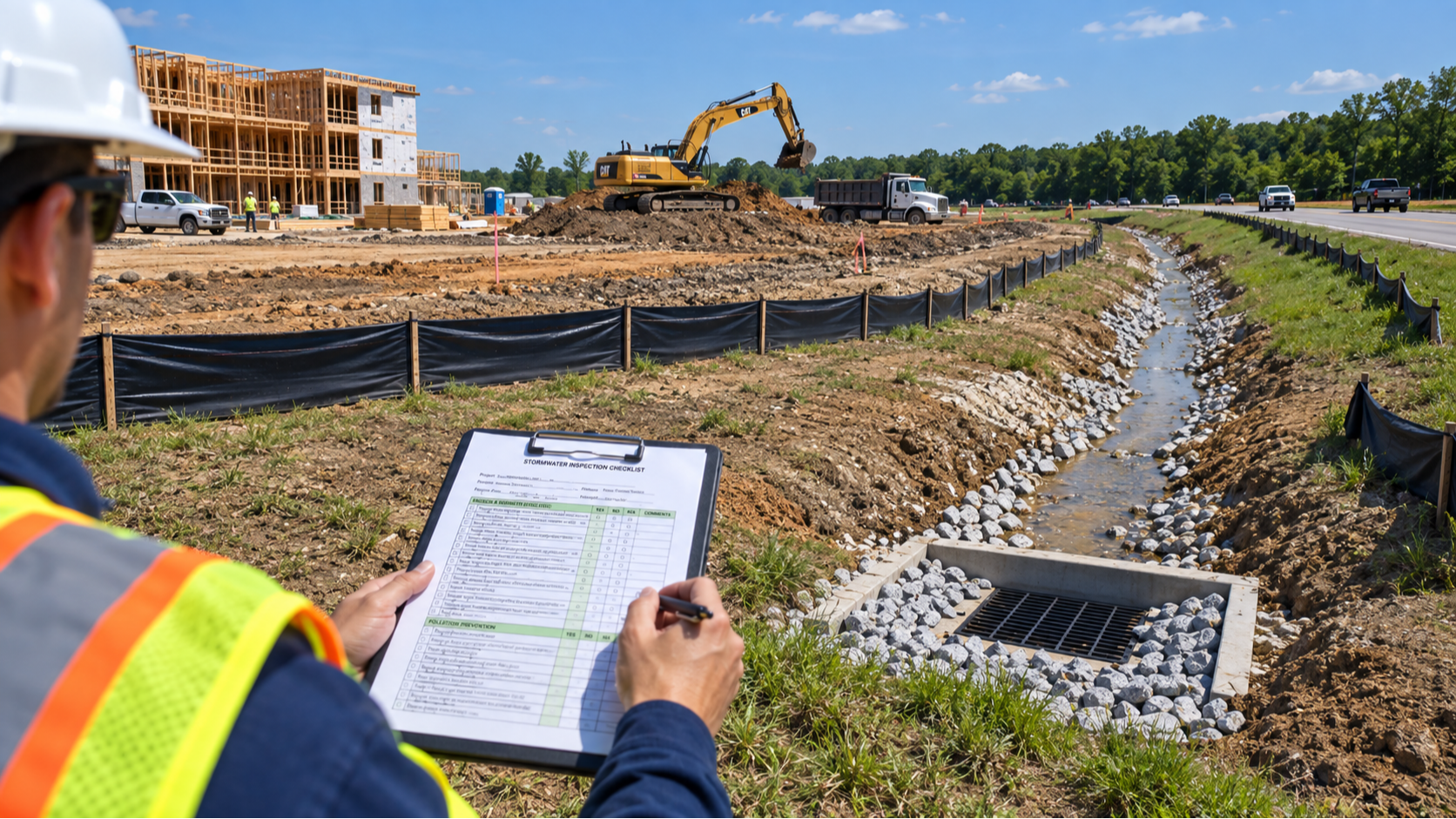
Construction sites change continuously as clearing, grading, utility work, vertical construction, paving, landscaping, and stabilization progress. Stormwater controls and documentation must change with them.
Summit provides field inspections, BMP evaluation, corrective-action recommendations, documentation updates, stabilization review, and permit closeout support. The objective is to maintain a functioning stormwater-management program throughout the life of the project rather than treating compliance as a one-time inspection requirement.
Industrial & Commercial Stormwater
Stormwater at an operating facility may interact with equipment, vehicles, loading areas, material storage, fueling operations, waste handling, exposed soils, outdoor processing, and other activities before leaving the property.
Summit can evaluate operations and drainage conditions, identify potential pollutant sources, and determine whether additional permitting, controls, monitoring, or documentation may be appropriate. For existing facilities, the assessment may also identify practical ways to reduce exposure or improve operations.
Surface Water Quality Monitoring
Surface-water monitoring may be needed to establish baseline conditions, evaluate a potential impact, document compliance, investigate a release, or understand changes in water quality over time.
Summit develops monitoring programs around the environmental question being investigated. Sampling locations, timing, field measurements, laboratory analyses, and monitoring frequency are selected based on the potential source, receiving water, and project objective.
Results are interpreted together with drainage patterns, weather conditions, upstream and downstream influences, and surrounding land use.
Erosion, Sediment & Drainage Investigations
Erosion and sediment problems often begin with how water moves across the property. Summit evaluates drainage pathways, exposed soil, erosion patterns, sediment deposition, stabilization, discharge points, and existing BMPs to determine where soil is being mobilized and why existing controls may not be performing effectively.
Understanding the cause is important. Repeatedly repairing a failed control will not solve the problem if runoff has been concentrated beyond its capacity or the drainage pattern has fundamentally changed.
Spill & Release Investigations
Spills can move rapidly when petroleum products, chemicals, contaminated water, sediment, or other materials enter storm drains, ditches, drainage channels, or surface waters.
Summit can investigate the source, likely flow path, potentially affected areas, drainage infrastructure, and receiving environment following a release. Where immediate response is necessary, investigation and corrective action can occur together so information collected in the field helps guide cleanup and follow-up monitoring.
A stormwater permit only works when the plan matches the site.
Stormwater compliance connects regulatory documentation with day-to-day field conditions. A project may begin with a permit and a well-developed SWPPP or SWMP, but construction sequencing, drainage, access, material storage, stabilization, and other conditions will change over time.
Summit provides continuity between permit preparation, stormwater planning, field implementation, inspection, monitoring, corrective action, and final closeout.
The same principle applies to industrial facilities. Stormwater controls should reflect the operations occurring at the property, and documentation should evolve when equipment, materials, drainage conditions, or operational practices change.
Stormwater findings should point to the source, not just the symptom.
Summit begins by understanding how water interacts with the property. We evaluate drainage pathways, site activities, potential pollutant sources, erosion and sediment conditions, existing controls, discharge locations, and the receiving environment.
Permitting and compliance requirements are then considered alongside what is actually occurring in the field. Where investigation or monitoring is needed, sampling is designed around a specific question rather than performed as a generic exercise.
When surface-water concerns originate from contaminated soil or groundwater, Summit can connect the project directly with our Soil Assessment & Remediation and Groundwater Investigation services.
- Map drainage
- Identify sources
- Evaluate impacts
- Correct conditions
- Document compliance
Not sure what stormwater or surface-water support your project requires?
Some clients contact Summit before construction begins because they need stormwater permit coverage and a compliant plan. Others already have coverage but need inspections, monitoring, or help correcting site conditions. Still others are dealing with sediment, drainage problems, spills, or potential impacts to a receiving water.
You do not need to determine the exact permit, monitoring program, or investigation scope before contacting us. Summit can review the project, facility operations, drainage conditions, existing documentation, and environmental concerns to determine the appropriate next step.